

logo
banner
CSERC Blog
CSERC'S Eductional Programs espanol Spanish verion of site


In About CSERC 
  » Our Efforts
  » Recent Successes
  » Meet the Staff
  » Our Budget
  » Key Links
  » Why We Give
  » Contact Us

Subscribe to CSERC's Monthly E-newsletter

Email:

Bookmark and Share

Recent Successes


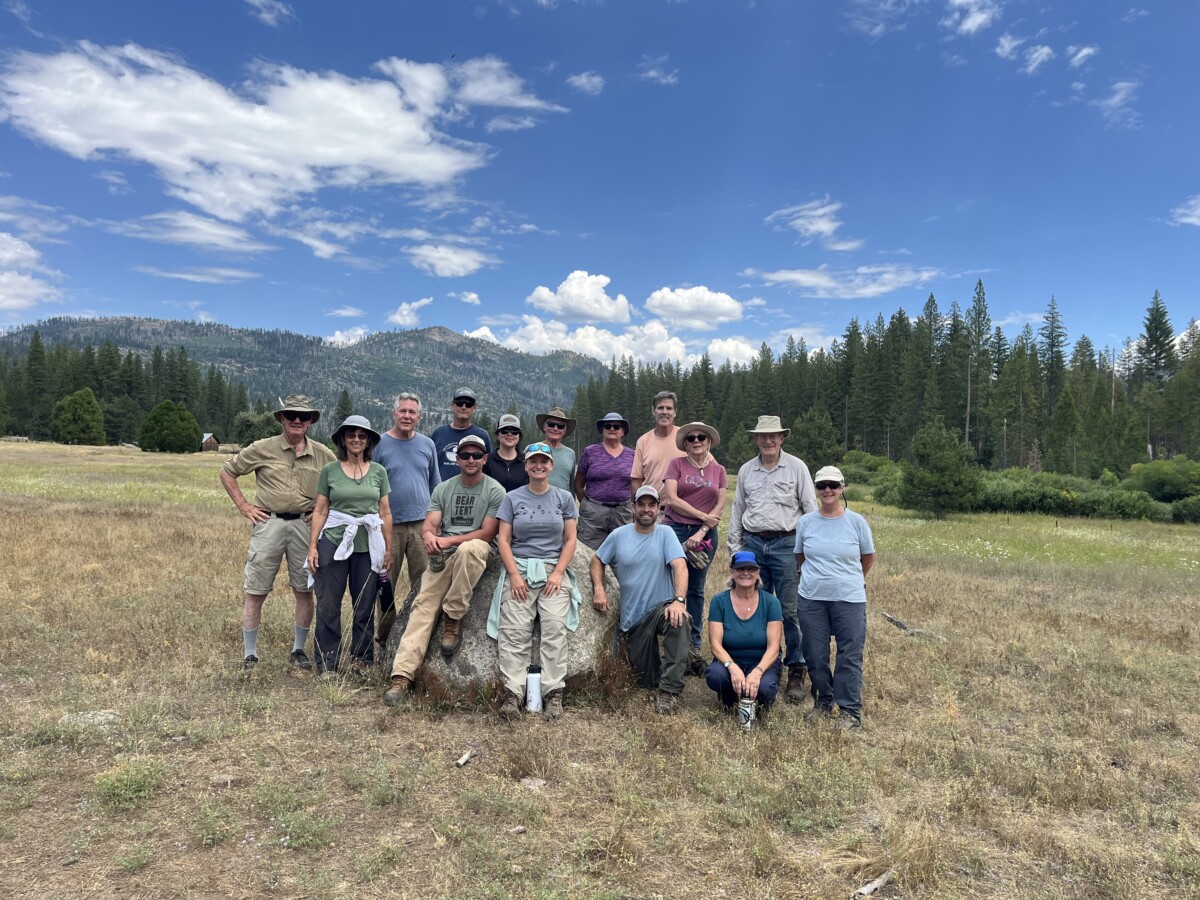
CSERC staff planning for their 2011 meadow monitoring season.


     Whenever we stand up for the environment, even when we don’t win on an issue, it reinforces the fact that we are going to be present to point out the needs of nature and potential legal challenges.  Part of the success is simply showing up relentlessly to be a witness and advocate.

     But in addition to being a high-profile “watchdog,” CSERC actually succeeds with many of our specific efforts.  In recent months, CSERC has achieved the following accomplishments:

CSERC Recent Successes – August 2011

1) Cabin removal near Emigrant Wilderness: In recent years the Forest Service has debated whether or not to require PG&E to remove an old house/cabin that PG&E kept in case it was needed to house employees if work was needed on the Relief Reservoir dam. The actual structure was just outside the official boundary of the Emigrant Wilderness. It was located close to a trail out of Kennedy Meadows more than two miles in on the trail through wild areas. CSERC led the effort to convince the Forest Service to require PG&E to remove this unnecessary old building that made backpackers and hikers feel they were intruding into a developed area instead of being miles out in a wild part of the forest. This summer the removal of that old building was finally completed, and the area has now been naturalized so that it no longer conflicts with a wilderness experience for thousands of visitors who pass by that spot each year. CSERC was pivotal in getting that building removal done.

2) Helping plan the use of our region's water resources: The State Water Board is currently accepting public input on a major U.S. Forest Service "water quality management plan" that affects all activities on national forest lands within California. This is a critical plan that CSERC has been engaged in for two years. The public comment period was only going to be open for a short time, but CSERC led efforts to get the public comment period extended for another month. In response to CSERC's request, the Water Board just agreed to lengthen the comment period. That extra time will give concerned members of the public a far better chance to give important input to the Water Board. CSERC not only succeeded in getting the extra time for public comment, but CSERC is also playing the lead role with the environmental community in coordinating all the groups so that conservation group comments can be most effective overall.

3) Water testing continues to show contamination in thte National Forest: For the past two years, CSERC's water quality sampling work has detected fecal coliform contamination in numerous streams within the Stanislaus National Forest at sites where concentrated livestock use produces pollution. In response to CSERC's water studies, the Regional Office of the Forest Service has implemented the agency's own water study program to sample forest streams. Due to CSERC criticism that the sampling was not broad enough to accurately reflect water quality, the Forest Service greatly expanded the water study to include at least monthly sampling on multiple national forests scattered across California. If CSERC had not done water sampling and proven that streams were being polluted, no Forest Service study would have been initiated.

4) Volunteer restoration work making a difference: Just so far in 2011, CSERC staff and volunteers have:

  • pulled non-native invasive starthistle plants on BLM land in the Red Hills;
  • erected seasonal fences at Cable Meadow and Stump Meadows to prevent livestock damage;
  • convinced the Forest Service to speed up fence work at two other meadows where cows were trespassing;
  • conducted another successful fen fencing project in the Calaveras Ranger District; and
  • completed important stream and riparian area restoration work on both the Summit District and the Groveland District that was directly requested by USFS staff.

More restoration projects are planned in coming weeks and months.

5) Advocating for Yosemite resource protection: CSERC staff has met directly with Yosemite Park officials and planners more than 20 times already in 2011 to advocate for greater protection for Park resources affected by intensive visitation. Likewise, CSERC staff has already met directly with Forest Service staff more than 50 times this year to report watchdog monitoring discoveries, to press for improved resource protection, and to give input on proposed projects.

     These are just a few of the many successes that CSERC has already accomplished so far this year. To learn more, email us with your questions at: info@cserc.org.


CSERC | PO Box 396 | Twain Harte, CA 95383 | (209) 586-7440 | info@cserc.org