A Must See- Yosemite’s Horsetail Fall in February

Published on Monday, February 4th, 2013

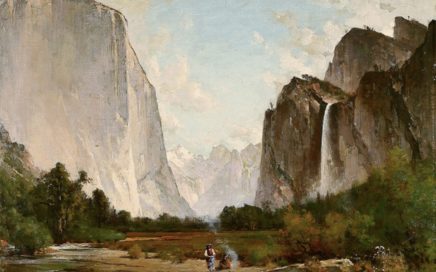
For a few brief days in February every year, the often overlooked Horsetail Fall in Yosemite National Park provides a special treat to those who time it right and are watching during the sunset hour.

Reflecting the orange glow of sunset, from the middle to the end of February, the falls actually give the appearance of being on fire! It literally looks as though lava is flowing from the falls.

Here is a great shot of this natural special lighting effect:

This past weekend, CSERC biologist Lindsey was climbing in Yosemite Valley and caught this picture of Horsetail Fall during sunset.  Still not quite the time for the falls to appear as though they are on fire, the sunset still brilliantly illuminated Horesetail Fall.

The great film series Yosemite Nature Notes did a great 8 minute documentary on Horsetail Falls- check it out!

Here is a link to Yosemite’s website page that provides info on getting to the best viewing spots to witness this phenomenon.

I am hoping to get out there this month to finally witness this event myself!

Have any of you been to Yosemite to see the “firefall effect” of Horestail Fall? What was your experience like?

-Julia Stephens, CSERC Blogger


Snowbird

Published on Wednesday, December 12th, 2012

Dark Eyed Junco

Dark Eyed Junco, “Snowbird”

Field Marks: Dark cap; sparrow sized; white bands on outer tail edges (seen best in flight)

Habitat: Forested areas; parks, bird feeders, urban areas in winter

Behavior: Forages on ground, sometimes in groups; flocks in winter; skittish

Feeding: Seeds;  insects during breeding season

Breeding: Can have up to 3 broods per year; 3 to 6 eggs per brood; altricial (young are born featherless and blind)


As winter settles in around us here in the Sierra Nevada, I find myself thinking about the critters who stay out in the cold and snow while we bundle up indoors. One particular bird species has been on my mind lately because they are one of few birds that can survive at  higher elevations through the winter. They inspire me to fluff my feathers against the cold during these winter months. In addition to their impressive ability to persist through the winters, they have also figured out how to maintain very healthy populations, despite nesting on the ground. This particular trait is responsible for many of the personal connections I have with the Dark Eyed Junco.

Juncos in Nest

The first time I realized that Dark Eyed Juncos nest in the ground was when I found myself peering into the eyes of three young Juncos alongside Highway 89 in Truckee. I noticed some motion on the ground, and upon investigation found the young birds. They were huddled together, barely able to fit inside the hole in the dirt embankment just a few yards off the highway. I was only able to take one photograph before hurrying away, at the behest of their twitting mother in the trees nearby.  It blew me away that these little birds managed to raise their young so close to the dangerous hustle of humans above them. Despite this seemingly vulnerable nesting strategy, Juncos are quite successful breeders and abundant across the continent.

Junco Nest with Eggs


My second encounter happened when I was out birding along Hull Creek. With my eyes to the skies looking for birds, I was surprised to watch a Junco emerge from the vegetation merely inches in front of my boot. Suspecting that she may be sitting on eggs, I pulled back the vegetation and sure enough there was a beautiful little nest made of grass, with three perfect eggs inside. Once again, the mother Junco was twitting at me from the nearby trees, so I let her return to her diligent watch and went on my way. I am still amazed at how long that mother Junco waited to fly off her nest, at how close she let me come to her and her young.

Dark Eyed Junco

Between all that I have learned about the Dark Eyed Junco and the personal experiences I’ve had with them, I am impressed by the hardy little bird. The name Snowbird truly is well deserved. They have a few techniques that help them survive the winter. Juncos form flocks during the winter, and each flock has its own hierarchy. This provides protection for the birds and allows them to forage together. They are also known for fluffing their feathers, which improves the insulation the feathers provide.

Despite the fact that they nest where we, and most creatures, tread, they have managed to maintain healthy populations by reproducing many times a year, with many young in each brood. I find it inspirational that such a “common” bird has such a diverse and interesting life. I hope that you’ll keep an eye out for these impressive little birds, and that the Snowbird finds its way into your hearts and minds as it has mine.


-Megan Fiske, CSERC Blogger


10 Ways to Give the Gift of Nature this Holiday Season

Published on Thursday, November 29th, 2012

During the holidays, I strive to make sure my gifts reflect my love and appreciation, for the recipients as well as the planets. Here are 10 ideas for great, unique gifts you can give that are still respectful and mindful of this big beautiful world we live in!

(1) Shop Local! For those who are harder to shop for, give a gift certificate to your favorite local business. Check your local Chamber of Commerce website for listings of the businesses in your area.

(2) Give the gift that keeps on giving: membership to your favorite local non-profit! CSERC is one of a kind in our region, and members know that their donations and support are being used effectively in our local community. A one-time $30 donation makes you or a friend a CSERC member! Check out our website for more information by clicking here.

CSERC Volunteers

(3) Field Guides are a great way to pique someone’s interest in their local flora and fauna! Being able to recognize and identify local species adds a challenge to even the smallest outings, including those into your own yard or neighborhood, as well as trips into the National Forest and Wilderness. Field guides encourage people to pay closer attention to detail, and I personally found myself seeing a lot more things “for the first time” once I bought my first field guide. A good all-around guide for the Sierra Nevada is John Muir Law’s Guide to the Sierra Nevada. It includes beautiful illustrations and identification tips for over 2000 species of flora and fauna in the Sierra. The Sibley series of guides cover a wider region, including the Central Valley and Sierra Nevada. The options are endless, so shop around. Encourage friends and loved ones to take a close look at the world outside and learn to identify local species by giving them a Field Guide this holiday season!

Birdwatching

(4) Native seeds make a great gift for your friends with green-thumbs, and even those without! Native plants usually require less care and attention since they are already adapted to the local conditions. Many of them will naturalize and not require any care at all after they’ve established themselves. Native plants help attract pollinators and provide habitat for many native species With so many gorgeous native species with so many benefits, why plant anything else?


(5) Found wood can be used for a diversity of gifts. This website suggests adding a few hooks and a wall mount to your favorite piece of driftwood to make a coat rack. My personal favorite is to use found wood, acorns, leaves, feathers, whatever catches your eye to decorate or build my own photo frames. Put your own artwork, or your favorite photo from your outdoor adventures in your own home-made frame! Thrift stores often have old frames that could use some sprucing up, or you can salvage the glass and other important parts to supplement your own construction idea.


Kestrel Painting


(6) Another great DIY idea: an eyeglass case made out of an old tie! This website has more details. Find your favorite funky, unique tie and with a bit of glue and even some sewing if you’re feeling ambitious, and you’ve got a unique, upcycled eyeglasses case!

Necktie >>> Eyeglass Case

(7) For our green-thumbed friends, plant a few bulbs in a pot, place the catch pan on top like a lid, wrap a bow around it and you’ve got a beautiful, long-lasting gift! If you’re feeling creative, get a plain clay pot and decorate it, or even give the recipient a small paint kit with a few brushes so she can decorate it herself! Some suggestions for successfully growing bulbs can be found on the California Native Plant Society Website.

Fawn Lilies


(8) Membership to a local CSA (Community Supported Agriculture) means your giftee will get weekly or bi-weekly boxes of fresh locally sustainably grown produce. Some programs are only for the summer, and others year round, so shop around and decide which one is right for you. In Tuolumne and Calaveras counties, Outer Aisle Foods, Red Earth Farm and Blue Oak Farm all offer CSA memberships.

(9) Give the gift of a pass to one of your local parks and your friend or loved one will be able to visit their favorite park whenever they want! The National Parks Pass is only $80 and is good for a year at all National Parks and Federal Recreation lands. If you prefer the California State Parks, the passes are a bit more expensive at $195 for a year. Both passes are good for a year from the date of purchase. Passes to individual parks are also available, such as a year long pass to Yosemite National Park for $40 a year.

Tuolumne Meadows

(10) Sign up your giftee for a field course at a nearby Community College. Columbia College in our local area offers courses in Wildflower Identification, Mushroom Identification, and a wide variety of destinations for Field Geology courses (I’ve gone all the way to Lava Beds, Mount Shasta, the Tahoe Basin, and even Death Valley with Columbia College!) Field classes are a great excuse to get outdoors and learn about the world around us, and an opportunity to connect with community members. Check your local community college catalog to see what courses they offer!

Students, Lava Beds

There are lots of great ideas for gifts floating around on the internet, and I’m sure you have some of your own. Get creative this holiday season and give gifts with meaning!

-Megan, CSERC Blogger


Quaking Aspen- Populus tremuloides

Published on Tuesday, November 13th, 2012

Cottonwoods, Eastern Sierra


Populus tremuloides,  “Aspen”, or “Quaking Aspen” are a member of the Poplar family,sharing traits with Poplar and Cottonwood, two more species that give us a spectacular show of color in the fall.

Aspen Leaf


Anyone who has seen a stand of Aspen on a windy day knows why they are called “Quaking” Aspen. The petiole, or stem, of an Aspen leaf is flattened, allowing it to “quake” in the slightest wind.

Bell Meadow, Third Largest Stand of Aspen in the Sierra Nevada


Aspen occur in large stands, like those in Bell Meadow, or as smaller populations, sometimes emerging from rockfalls and other disturbed sites. Aspen are considered a pioneer species, meaning that they like to come in after disturbance and populate the bare soil.


Aspen Growing Towards the Light


There are many features that make Aspen excellent pioneers. They are very tolerant of fire, as their bark is very green and contains a lot of moisture. Aspen are sun-loving trees as well, so when fire comes in and reduces the number of trees and , thus,  the amount of shade, aspen thrive.


Young Aspen

Aspen reproduce by two methods, lending them more strength as a pioneer species. Like most flowering plants, aspen produce seeds for reproduction. In early spring, fluffy white catkins emerge. The seeds are attached to the “fluff” which is transported by wind to hopefully produce new seedlings. This method of reproduction is less successful, due in part to the short period that the seeds are viable.

Colorful Clones, Eastern Sierra


The aspen’s more successful approach to reproduction involves the production of “shoots and suckers.” As aspen begin to die, or disturbance such as fire threatens the aspen, chemicals are released that cause the aspen’s roots to send out “suckers.” These suckers are clones of the parent tree, and thus are genetically identical. A clone refers to the parent tree and all of its suckers, and can range in size from less than an acre to over one hundred acres! The largest aspen clone is in Utah, weighing in at 14 million pounds and spanning over 100 acres. It is estimated to be around 80,00 years old!


Bear Claw in Aspen Bark

The smooth, silvery bark of Aspen add to the dramatic fall color, but when examined at closer range, one can see a shade of green beneath the silver surface. The green of an Aspen’s bark reveals its chlorophyll and also makes it nutritionally valuable. However, aspen bark should probably only be consumed in a survival situation, as damaging their bark is very detrimental to the trees’ health, and the Aspen populations in the West are in dramatic decline. However, agencies are working to come up with ways to protect these valuable trees. Prescribed burns and the allowance of wildfires to burn are two ways that we are encouraging the recovery of the Aspen populations of the West.

Aspen are an ecologically important species for many reasons. I believe they are a beautiful, dynamic tree that spectacularly indicates the changing of the seasons, but also indicates the health of our forest ecosystems.


-Megan Fiske, CSERC blogger


Sometimes it’s the little things

Published on Wednesday, October 17th, 2012

I have to admit, when I think about getting outdoors during my weekends, the first places that come to my mind for me to go to usually involve some kind of spectacularly scenic destination.  It helps motivate me to hike 8 miles or drive an hour when I have a rewarding destination like an alpine lake or a mountain vista to aim for.  There is nothing really wrong with this considering it gets me outdoors and enjoying the environment. I think that a lot of us do this, especially people who live in more urban settings.  It is more inspiring to plan a vacation to Yosemite, or Lake Alpine, or somewhere that promises of scenic memories sure to captivate our minds and provide stories we can tell our friends.

Yesterday I was browsing through pictures on my photo folder on my work computer, most of which were taken while I was working in the field, and some from my free time in the outdoors this past summer.  As I scrolled through the pages of photos, some of them stood out to me more than others, and after awhile I started to notice a pattern.  The majority of pictures that captured my attention were the  ones that I took not of a scenic landscape – but of interesting things like trees, plants, rocks, and perspectives that I encountered and piqued my interest while out in the woods.

Big deal, I know.  The thing is though, that most of these pictures while taken outside could have been taken at a million locations in the foothills or mountain forests of the Sierra Nevada.  It reinforced to me that beauty is all around us, and we don’t have to be at the perfect outdoor spot to have a memorable experience with nature.  Sometimes it’s the little things that inspire our connection to the outdoors.


What inspires you in nature?

-Julia Stephens, CSERC Blogger


Appreciating the Part Pollinators Play

Published on Monday, August 6th, 2012

Why do we care about pollinators here in the Sierra Nevada?  Without the role that insects and wildlife play in pollinating plants, the bounty of wildflowers in our region would be much less.  Insects play a critical role in helping plant species successfully reproduce, as well as our food web overall. In exchange, plants provide food for survival to the pollinators, in the form of nectar and pollen.

The purpose of flowers (ecologically) is to aid plants in reproduction via pollination and ultimately seed production, often meaning that a plant’s entire appearance and smell is designed to lure in potential pollinators!

I can hardly take a picture of a flower in the summertime without inadvertently photographing an insect pollinating it.


I must admit, there is something irresistibly entertaining in watching a bumble bee squirm his way down into the depths of a flower as it continues its never ending quest for pollen and nectar.


Local nature photographer Steve Hannon recently gave our Center some beautiful pictures of pollinators that he took last month near Barn Meadow in the Stanislaus Forest.  We think they’re great, and think you will too.


Check out more of Steve’s photo work at  his website: http://www.hannonphoto.com

Who is your favorite Sierra Nevada pollinator?

-Julia Stephens, CSERC Blogger


Weird Life of the central Sierra, Part 2 – Plants that resemble Fungi (Myco-heterotrophs)!

Published on Wednesday, June 13th, 2012

Awhile back, we started a series of blogs on weird life of the central Sierra. Since there are so many unique and unusual species in our region, I thought I’d reopen this series by highlighting another weird type of life in this region – plants that resemble fungi.

Known as myco-heterotrophs, these plants are often mistaken by the untrained eye as strange mushrooms popping up out the soil. They aren’t green as most plants are because they’ve lost their ability to produce chlorophyll and to use photosynthesis for harnessing energy from the sun.


How do these plants survive without photosynthesis?

Most green plants have a mutual, symbiotic relationship with fungi — they harness energy from the sun in exchange for nutrients broken down by fungi in the soil.  Unlike green plants, myco-heterotrophs must parasitize or ‘steal’ nutrients from other plants or fungi, giving very little or nothing in return.

There are two main types of myco-heterotrophs. The first, heterotrophs, parasitize nutrients from plants using haustoria – special roots that can be used to penetrate a green plants tissue and get nutrients. The second, mycotrophs, draw nutrients from from mychrorizzhal fungi attached to another plants roots.


What are some cool myco-heterotrophic plants to look out for in the central Sierra?

Sugar sticks (Allotropa virgata) are in the Heath Family.  They feed exclusively on the mycelium of Matsutake mushrooms.


Snow plant (Sarcodes sanguinea) is one of the most well-known myco-hetertrophic plants.  As its name indicates, the flowers emerge in the spring from ground that may still be snow-covered.


Spotted coralroot (Corallorhiza maculata) and striped coralroot (Corallorhiza striata) are parasitic orchids that have lost their ability to photosynthesize.  Unlike most orchids, which become less dependent on fungi after they’ve germinated from seed and grown green leaves, spotted and striped coralroots rely on the host fungi their entire leaves.

Spotted Coralroot

Striped Coralroot


Pinedrops
(Pterospora andromedea) are in the Blueberry Family (Ericaceae).  They grow in coniferous forests from southern Canada to Mexico.


Fringed Pinesap (Pleuricospora fimbriolata) is the smallest mycotrophic plant in the heath family and can be easily overlooked.


Hope you enjoyed learning a little more about the unique plants that resemble fungi in our region! We hope to bring you more information on other interesting central Sierra species in the future.  Until then, I encourage you to be on the look out for these cool plants while you are out spending time in the forest and mountains.

-Heather Campbell, CSERC Blogger


The importance of raising watershed awareness

Published on Tuesday, May 8th, 2012
Snowpack

The snowpack (annual mountain snowfall slow to melt in the summer) in the Sierra Nevada is critical for California's water supply.


After an unusually dry and warm winter, March and April provided us with much-needed storms.  The snowpack increased, although not to the point where we can feel free and clear of a potential drought this upcoming summer!


Thinking about our current water situation recently brought up a conversation amongst my co-workers.  We observed that many people here in the mountains (and elsewhere) are unaware that while its true that the quality and quantity of the water in our life-giving rivers and streams is affected by the yearly total of rain and snow, it is also dependent on human actions that affect our local watershed.  This need for awareness has spurred a growing movement in this country to increase the understanding of what a watershed is, that we all live in one, and that what we do can affect its health.

So…what is a watershed (and how do we affect it)?

A basic sketch of a watershed's elements.

A basic sketch of a watershed's elements.

A watershed is an area of land that collects water from rain or snow that drains to the same place. The water collected in the watershed seeps into the ground or flows into rivers, streams, and lakes. A watershed can be thought of on a small to a large scale.

Unmaintained roads can add large amounts of sediment to creeks and rivers, harming the habitat for important fish and amphibian species.

Unmaintained roads can add large amounts of sediment to creeks and rivers, harming the habitat for important fish and amphibian species.


If you have a stream in your backyard, you might think about the sources of water for that particular stream, and think of those as a watershed for the stream.  You could also think about the river that that stream flows into, and all the other streams contributing to that river, and those would be part of that river’s watershed.  That river could flow into a larger river which eventually runs into the ocean, making the river part of the ocean’s watershed.

What does that mean? Through watersheds, we are all connected!  When our forests are clearcut, or we add more paved roads, or leaky septic systems go unrepaired- these things can wash pollutants and sediments into our rivers, lakes, reservoirs – and the availability of clean water for people and wildlife is diminished. It’s important to raise awareness of how we as people can harm or improve our local watersheds.  Knowing that our actions can cause problems, we can support solutions that help us to live in better balance. The Center for Watershed Protection has a great website to help raise awareness about what a watershed is, why they are important, and how we can better protect it.

Connecting with our local watershed.

What watershed do you live in?  Where I live (Tuolumne County), there are many local creeks which drain into the major rivers (the Stanislaus, Tuolumne, and the Clavey) within our county’s mountains.  Twain Harte Creek, Sullivan Creek, Rose Creek, Deer Creek, and Woods Creek are just a few of the creeks that may ring a bell for local residents.  And there are many smaller seasonal creeks and wet meadows which contribute to those creeks.

Meadows can be important natural aquifers for a watershed, but when they are degraded they lose their ability to retain water and dry out.

Meadows can be important natural aquifers for a watershed, but when they are degraded they lose their ability to retain water and dry out.

As you drive up and down through the hills it can be interesting to try and visualize what particular drainage you are in at that moment.  Practicing this, I find my awareness of the layout of our land in this region as well as the many watersheds I move in and out of has grown. I really enjoy it!  I encourage you to try it as well.  It helps to have a map you can refer to with the creeks and rivers in your area on it.  I found an amazing interactive watershed map online, on the Calflora website.  Check it out here if you want to really see your watershed. As I get better connected with the watersheds in my area, I also have become more aware of how many impacts each and every creek and river within a watershed endures.

What watershed do you live in?  What are threats to your watershed, and what can you do to help protect it?

-Julia Stephens, CSERC Blogger


The poppies are here!

Published on Tuesday, April 17th, 2012

I know it has been spring for almost a month now, but for me spring’s real start is when I see the poppies covering the hillsides in some of my favorite foothill locals.

Yesterday, I drove the back way from Twain Harte to Groveland on the Old Ward’s Ferry Road and was rewarded with an incredible display of poppies by the Ward’s Ferry Bridge.  Caution: this road is narrow, winds, and often is close to being one lane in many sections!  Drive with care and find a safe spot to pull over if you are stopping to look at flowers.

Other great spots to see poppies and other early spring wildflowers

- Highway 49 by the Stevenot Bridge (en route to Angels Camp).

- Highway 49 from Moccasin to Maripoisa.

- Areas along 49 between San Andreas and Jackson

- Highway 140 in the Merced River Canyon.  A great hike you can take that is world-renowned for its poppy displays is the Hite Cove Trail about 8 miles west of El Portal.

The blue oaks are at their peak vibrance for the year, as their new green leaves spread out.

Also, blue oaks are at their peak vibrancy for the year, as their new green leaves spread out!

Where are your favorite poppy displays?

-Julia Stephens, CSERC Blogger


An Array of Life Flourishes in Chaparral in Late Winter & Early Spring

Published on Thursday, March 1st, 2012

Lacking spectacular large trees, booming waterfalls, or lush grasslands that are characteristic to many plant communities of the Sierra Nevada, chaparral isn’t usually thought of as the most scenic of life zones in this region. The dense, woody shrubs can make accessibility difficult to people. From a resource point of view, it is also considered to be of little value for livestock, farming, or lumber.


Chaparral was one of the Grizzly Bear’s last strongholds in California

Ironically, it may just be for these reasons that chaparral in many areas remains relatively undisturbed by human beings, providing a sanctuary to many species that live there. Did you know that one of the last strongholds of the Grizzly Bear after being chased from California’s valleys and forests during the late 1800’s was thought to be in the dense continuous thickets of chaparral? Apparently, not many sheepherders or other people cared to venture into the shrubs because it was considered to be highly unsuitable land.


Chaparral thrives in winter and spring

At this time of year, when many plants are dormant, chaparral is undergoing its biggest growth spurt. During a typical year, life giving rains in winter break the dry spell of summer and give the shrubs what they need to grow. This also results in one of the first opportunities to see spring wildflowers in bloom.


Manzanita blooms as early as February
Buck Brush blossums


Chemise flowers
Bright fushia redbud blossums


Read on »