
What is a water cycle?
A water cycle describes how water moves through a watershed and cycles through the earth and the atmosphere. Water can be in different forms, like rain or condensation during different parts of the water cycle
To understand the water cycle is much easier with a picture. Look at this diagram of the water cycle.
Can you recognize the different parts of the cycle?
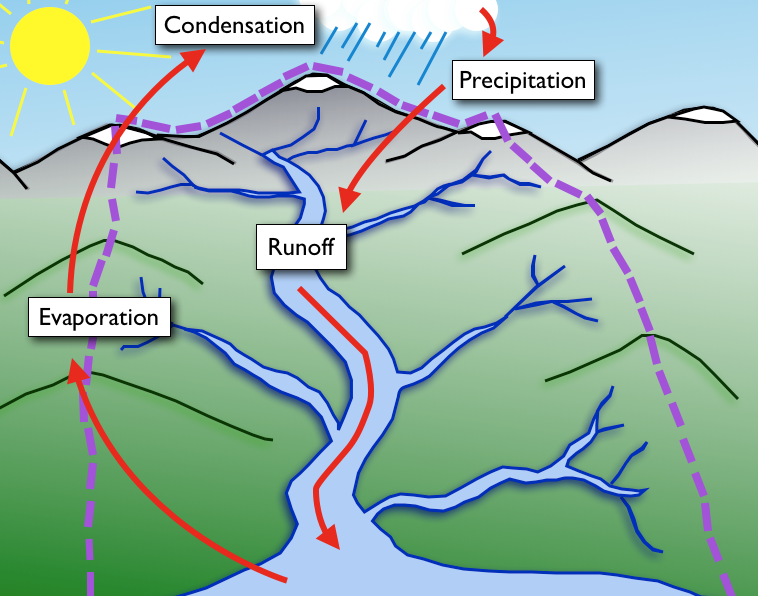
The water cycle in 4 short steps:
1) The sun heats up water and causes it to evaporate from lakes, rivers, and the ocean.
2) The evaporated water condensates into clouds in the sky.
3) Water falls back to the earth from the clouds as precipitation. Precipitation can be in many forms, including rain, snow, sleet, or hail.
4) Runoff from rain and snowmelt flows into streams, rivers, lakes, and to the ocean.
From here, the cycle begins again.
Do we run out of water?
The cycle of water is closed. This means that the amount of water we have now is all the water we will ever have. However, our supply of freshwater, that people depend upon, is limited.
The ocean contains 96.5% of the water on earth, and the freshwater people depend upon only makes up 2.5% of the water on earth, and 68% of that freshwater is frozen as glaciers, ice caps and snow!
We may not run out of water, but we have to protect our water from contamination to ensure we have enough freshwater available.