Late spring rains and summer thunderstorms boost water resources
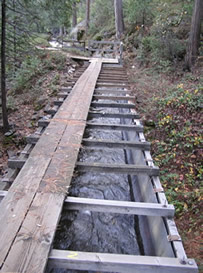
At one point in late winter, the drought affecting California and our local region seemed so dire that the risk of regional customers running out of water was extreme. Flows released from upstream reservoirs were shrunk so low that only a minimal amount dribbled downstream in some river reaches. Catastrophic consequences were assured, and everyone scrambled for solutions.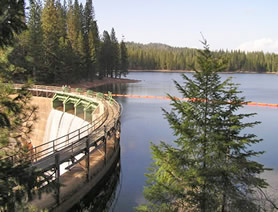 Then weekly spring rain events, with unexpected snow accumulations, resulted in both Pinecrest Lake and Lyons Reservoir not just filling – but spilling significantly, as shown at left. Partly in response to CSERC’s persistent promotion to get more water back into the South Fork Stanislaus River below Lyons, PG&E agreed to raise the minimum flow in the river from 1 cubic feet per second to 3 cfs, more than doubling water for fish and other species. Elsewhere, strident rhetoric by some water advocates, who were concerned about economic impacts and the loss of lawns or landscaping, resulted in strong debate over the lake level at Pinecrest and whether or not utility district customers should even be required to accept mandatory reductions in use. The Tuolumne Utility District staff prudently reduced operational use of water in the district’s inefficient ditch system to reduce some of the significant amount of water that is wasted in the open ditches due to evaporation, leaks, and end losses. The State Water Board agreed with the utility district, CSERC, and others that in this specific drought situation, it made sense to allow the lake level at Pinecrest to be drawn down lower than desirable for recreation in order to assure an adequate water supply for TUD’s residential and agricultural customers. During all of these discussions and debates between various water interests, CSERC has been highly engaged. Reporters have relied upon our staff’s knowledge of the lengthy FERC hydro relicensing process and our field knowledge of both the Stanislaus and Tuolumne River systems. Over and over we have pointed out that Central Valley and other downstream water users are using vast amounts of water (flooding orchards, watering pastures, and spraying crops in the heat of hot summer afternoons) while locals conserve.