Unlike some areas where the Rim Fire consumed as much as tens of thousands of acres of forest in a day, the Clavey River canyon’s most severely burned area was reportedly lit intentionally. Because the main wildfire had slowed to a crawl before reaching the still-green area, that upper Clavey old-forest habitat was reportedly lit by aerial ignitions over multiple days to ensure a consistent burned landscape within the fire perimeter. Given the media and political pressures of the time, it may be understandable that the broad area at right was ignited. To CSERC, it is heartbreaking. Nevertheless, CSERC and other local conservation groups have set aside frustrations and have poured energy into working for restoration solutions for the Rim Fire area. 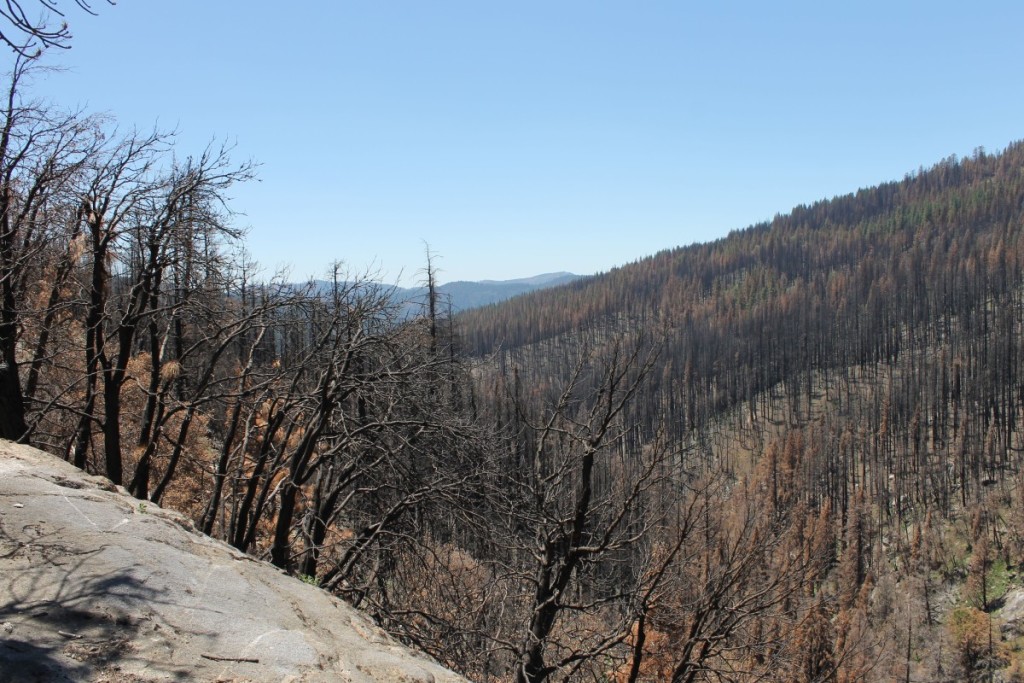 No one can undo the fire. What can be controlled is what is done now for fire recovery. In recent months CSERC nvested a significant amount of time and effort into successfully helping to get two major grants that are now funding scientific surveys of meadows and of springs/seeps within the burn area. Those meadow and spring surveys are intended to help the Forest Service learn where future restoration projects are most critically needed. At present, the USFS is working toward two key decisions. The first is how much to salvage log. The second is how much to replant with tree seedlings. Some CSERC members may have seen newspaper or online articles or action alerts from various groups that have attacked salvage logging plans by the Forest Service as proposing “massive clear-cuts,” or as “destroying the recovering forest.” In reality, CSERC and other local conservation groups, timber industry representatives, and other regional interests have joined together to work closely with the USFS as part of the Yosemite Stanislaus Solutions (YSS) collaborative group — pushing for balanced, low-controversy salvage logging and reforestation.
 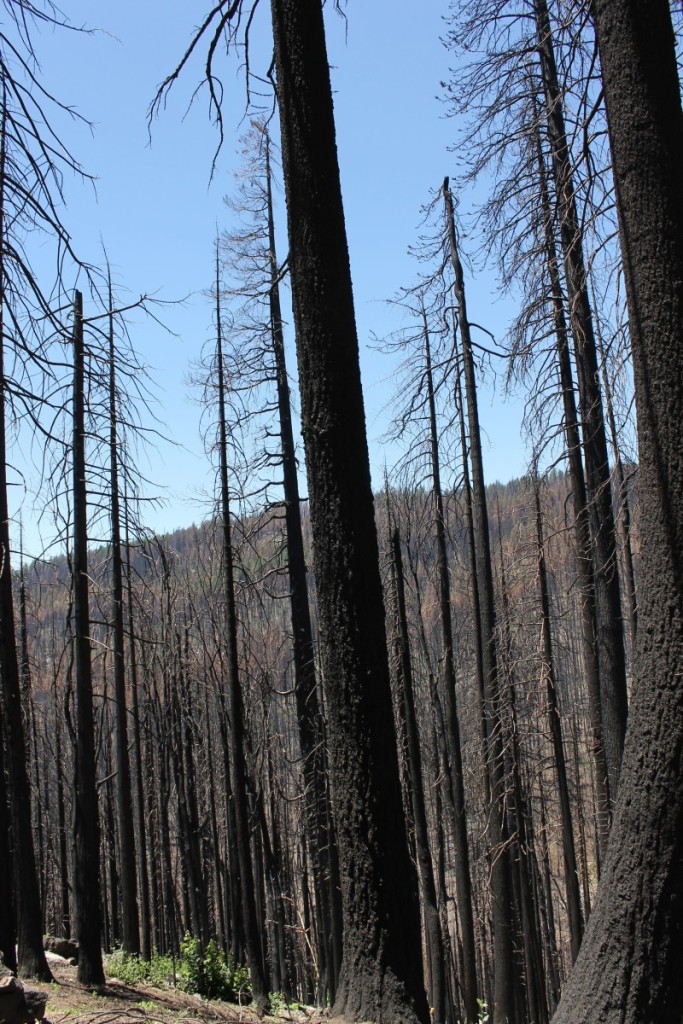 No salvage logging is planned in any wild areas such as the Clavey canyon. In the already-roaded general forest, some areas as vast as many square miles don’t have any surviving green trees. Dead trees blanket the landscape. Unless salvage logging treatments remove some of those thickets of standing dead trees, they will fall over and eventually create a “jack-straw” jumble of dense, woody fuel that will greatly increase the likelihood of another catastrophic wildlife in coming years. CSERC and local collaborative interests support leaving many areas unlogged — to slowly recover as undisturbed burned habitat. But across many strategic areas, removing some of the huge amount of dead trees is critical to reducing fuel loading so that managed fires can be used periodically to create a long-term healthy forest landscape. It also is prudent to sell some portion of the dead trees while they still have value as lumber so that taxpayers can receive income for removing that fuel. Otherwise, taxpayers may pay millions of dollars in the future to remove those same dead trees once they have deteriorated past having value.