

One legal success is finalized, while a second lawsuit continues
For many years, CSERC and other conservation groups worked hard to convince the U.S. Forest Service to produce a balanced plan to reduce significant noise, water, and wildlife impacts from off-road-vehicle use in the forest. We went to great lengths to provide highly detailed comments, maps, photos, and other fieldwork data from years of CSERC’s watchdog monitoring.
After more than a decade of planning processes that led up to an actual Motorized Vehicle Management Plan decision in 2009, Stanislaus Forest officials rejected every middle ground solution submitted by CSERC, The Wilderness Society (TWS), and Public Employees for Environmental Responsibility (PEER). Even though we only asked for closure of the off-highway-vehicle (OHV) routes that caused the most harm, Stanislaus Forest officials chose instead to approve 137 miles of previously unauthorized OHV routes. CSERC, TWS, and PEER appealed. In 2010, when the Regional Office sided with local Forest officials, we sued.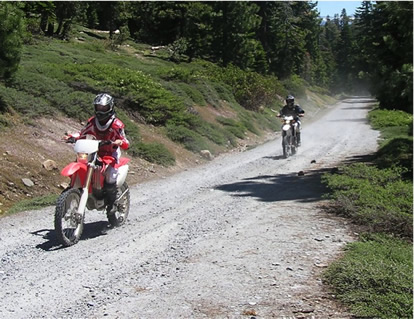
The litigation took two years to work its way through the courts, but eventually CSERC and our partners prevailed. In 2012 the court ruled that the Forest Service had failed to show that it had used criteria to carefully consider the environmental impacts of approving all of the user-created routes.
For another two years, settlement negotiations dragged on. Finally, in May the USFS agreed to close 40 miles of OHV routes to public use. 18 miles of the total routes were currently open, and now will be formally closed. The other 22 miles of OHV routes had already been temporarily closed awaiting mitigation measures. Based on the settlement agreement, all 40 miles of routes will now stay closed until a new planning analysis is completed.
In a separate lawsuit, the Karuk tribe, CSERC, and other groups filed litigation in 2012 against the State Dept. of Fish and Wildlife for failing to produce a Suction Dredging management plan to protect rivers, streams, and aquatic species. Settlement hearings took place early this summer, and more are scheduled in September.
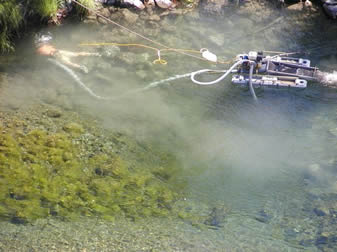
The lawsuit is important because miners often turn the South Fork Stanislaus River brown with sediment during summer, when flows are low and aquatic species are most vulnerable. Suction dredging is also noisy and disturbs visitors trying to enjoy quiet recreation in the public forest. State officials proposed to allow months of dredging even during times when at-risk species were most at risk. The State has also failed to acknowledge that it has inadequate staff to actually enforce regulations.